
Introduction
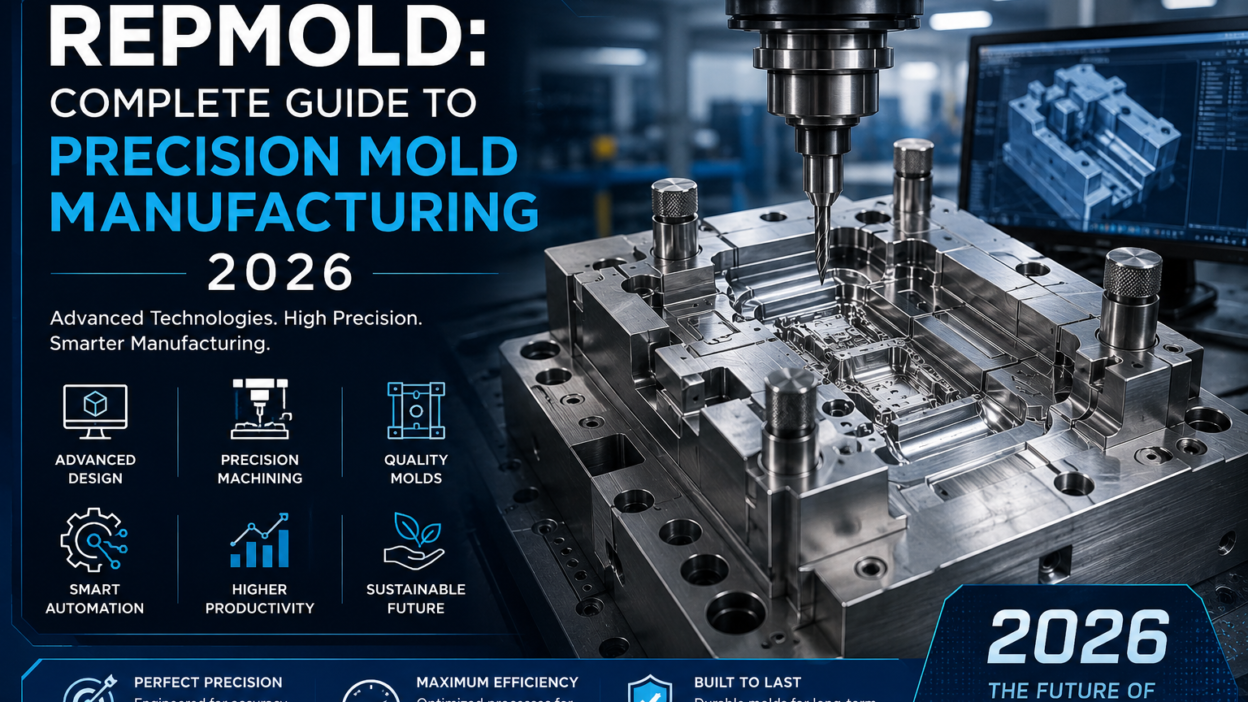
Repmold is now an important concept in current manufacturing business, particularly in the field of precision molds, tooling solutions, manufacturing, and industrial engineering. As industries continue to require better quality products, shorter production cycles, and better production efficiency, the use of advanced technology in mold-making have become crucial. Repmold is a new method of mold production, design maintenance and optimization, which helps manufacturers achieve these ever-growing expectations.
When it comes to manufacturing medical devices, automotive components and plastic packaging, consumer electronic devices or industrial products, companies depend on molds that are high-performance to ensure accuracy and consistency. Understanding how Repmold systems as well as techniques work can provide businesses with an edge in the market by increasing production quality and decreasing the operational cost.
This comprehensive guide will cover everything you should be aware of about Repmold and its uses and benefits, as well as technologies industries, trends, problems, and developments that will impact manufacturing in 2026.
What Is Repmold?
Repmold is a term used to describe the advanced methods of manufacturing and replication employed to produce highly precise molds to produce industrial products. The idea combines high-precision engineering, the latest design software as well as quality control systems and new manufacturing methods to create molds capable of providing consistent and repeatable outcomes.
Modern mold manufacturing is not restricted to conventional machining techniques. Nowadays, Repmold solutions often integrate technological advances like Computer-Aided Designs (CAD), Computer-Aided Manufacturing (CAM) Simulation tools, systems for automation and the latest advances in material science.
The main goal of Repmold is to make robust, durable and precise molds that increase productivity while minimizing manufacturing defects.
Why Repmold Matters in Modern Manufacturing
Success in manufacturing often hinges on the consistency of the product. Even minor variations in size can impact product performance, satisfaction of customers, and even regulatory compliance.
Repmold technology helps solve these problems by offering:
- Greater dimensional accuracy
- Speedier production cycles
- The reduction in the amount of waste generated
- Improved product quality
- Improved mold durability
- Lower long-term production costs
As industries get more competitive businesses are investing heavily on advanced mould solutions that enhance efficiency in operation and ensure high standard of quality.
The Evolution of Mold Manufacturing
The industry of mold making has experienced dramatic changes in the last several years. The traditional methods relied heavily on mechanical machining and manual labor. Although they were effective, these methods involved a lot of work and lengthy time frames for production.
Modern Repmold processes rely on technology and automation to attain the highest levels of precision previously unattainable.
Traditional Mold Manufacturing
Early mold production was:
Drafting manuals
Conventional milling
Hand polishing
Physical prototypes
Production lead times that are long
While these techniques laid the foundation for the modern tooling industry but they also led to more expensive costs and a slower rate of scaling.
Modern Repmold Manufacturing
Modern systems incorporate:
3D modeling
Digital simulations
CNC machine
Automated quality control
Advanced surface treatments for advanced surface
Predictive maintenance technology
These advances significantly increase effectiveness while also reducing the risk of manufacturing.
Core Components of a Repmold System
The successful Repmold process requires a variety of interconnected parts that work together to produce optimal results.
Mold Design
The design stage is the basis of mold production. Engineers design elaborate digital models that incorporate the material’s behavior, product geometry as well as cooling channels and the manufacturing needs.
Advanced simulation software can detect potential problems before production starts.
Material Selection
The choice of the correct mold material can directly impact the performance and longevity of your.
Common materials are:
Steel alloys
Aluminum alloys
Tool steels
Steel that is hardened
Alloys based on copper
The selection of materials is based on variables like production volume the operating temperature, as well as the complexity of the product.
Precision Machining
Modern CNC machines permit manufacturers to create extremely tight tolerances as well as complex geometries.
Precision machining assures that molds conform to precise specifications for design, while ensuring the same quality throughout the production.
Surface Finishing
The appearance of the product is influenced by its surface and the performance of molds.
Finalization processes can include:
Polishing
Texturing
Coating
Treatment of heat
Laser finishing
These treatments enhance the durability of the product and improve its appearance.
Repmold Applications Across Industries
One of the major reasons Repmold has gained a wide-ranging acceptance is its versatility across a variety of industries.
Automotive Industry
Automobile manufacturers need highly precise molds for making components like dashboards as well as lights, bumpers and even interior parts.
Repmold technology can help you to achieve:
Consistent part quality
High-volume production capability
Reduction of manufacturing defects
Increased safety compliance
Medical Manufacturing
Medical products require a high degree of accuracy due to the strict regulations.
Applications can include:
Instruments for Surgical Use
Diagnostic equipment
Housings for medical devices
Disposable healthcare products
Repmold solutions guarantee high-quality and reliable production in each manufacturing cycle.
Consumer Electronics
The electronics industry relies heavily on the precision of molding to make devices like smartphones laptops, laptops and wearable devices and accessories.
Modern molds allow manufacturers to develop intricate designs while maintaining the structural integrity.
Packaging Industry
Molds are used by packaging companies to make caps, containers closures, caps, and other packaging products.
Repmold technology improves efficiency of production and help reduce waste material.
Aerospace Engineering
Aerospace applications require a high degree of precision and dependability.
Molds are used to create components that meet the strictest specifications for performance and safety and are light in weight.
Repmold vs Traditional Mold Manufacturing
| Feature | Traditional Mold Manufacturing | Repmold Technology |
|---|---|---|
| Design Accuracy | Moderate | Extremely High |
| Production Speed | Slower | Faster |
| Automation Level | Limited | Advanced |
| Material Optimization | Basic | Highly Optimized |
| Quality Consistency | Variable | Consistent |
| Maintenance Monitoring | Reactive | Predictive |
| Production Cost Efficiency | Moderate | High |
| Scalability | Limited | Excellent |
The study clearly shows the reasons why many companies are moving to more the most advanced Repmold methods.
Benefits of Repmold Technology
Enhanced Precision
Modern engineering tools allow manufacturers to attain a high degree of precision. This decreases variation in the product and increases overall quality.
Increased Productivity
Automation and improved workflows allow manufacturers to make more units in a shorter amount of time.
Reduced Waste
An accurate mold design eliminates any imperfections, which reduces material waste and production loss.
Improved Product Quality
A consistent mold performance assures that the all products are in line with the exact specifications during production runs.
Longer Mold Life
Innovative materials and protective treatments enhance the durability of mold and decrease the cost of replacement.
Lower Operational Costs
Although the initial cost may be greater, the long-term savings usually outweigh initial costs.
The Role of Digital Engineering in Repmold
Digital transformation is now an essential feature for modern mould manufacturing.
Engineers today use sophisticated software for:
Create virtual prototypes
Examine the flow of materials
Simulate cooling performance
The ability to predict wear and tear on mold
Optimize production efficiency
These tools digitally assist manufacturers to spot issues before production starts, which saves time and money.
Artificial Intelligence and Smart Manufacturing
In 2026, artificial Intelligence will play a growing part for artificial intelligence Repmold operations.
AI-powered systems are able to analyze production data to provide useful insight into:
Quality Control
Machine performance
Maintenance scheduling
Optimization of production
Defect prediction
This information helps manufacturers make better decisions and reduce the amount of downtime.
Sustainability and Environmental Impact
The environment is now an important concern across all manufacturing industries.
Repmold is a partner in sustainability by:
Reduction of material waste
Energy-efficient production methods
Longer mold lifespan
Better recycling compatibility
Lower carbon emissions
Companies that adopt sustainable mold technology typically reap both environmental and financial advantages.
Challenges Facing Repmold Manufacturers
Even with its benefits Repmold implementation may pose a number of issues.
High Initial Investment
Modern machinery, software and training programs require a significant amount of initial capital.
Skilled Workforce Requirements
Modern mold manufacturing is dependent on highly educated technicians and engineers.
Rapid Technology Changes
Manufacturers should be constantly updating their equipment and processes to stay relevant.
Quality Management Complexity
In order to ensure consistency throughout large scale production settings calls for advanced monitoring systems.
Organizations that can successfully tackle these issues often enjoy significant long-term benefits.
Future Trends Shaping Repmold in 2026 and Beyond
Manufacturing molds in the future is evolving quickly.
Many emerging trends are predicted to impact the industry.
Additive Manufacturing Integration
3D printing technology is increasingly becoming integrated into mold manufacturing processes.
This permits:
Rapider prototyping
Complex internal structures
New cooling systems for improved cooling
Shorter development cycles
Smart Factory Connectivity
Industry 4.0 technology allows molds, machines and machines to talk in real-time.
This increases visibility, efficiency and decision-making across manufacturing processes.
Advanced Materials
Researchers continue to create stronger, lighter and more durable mold production.
These advances enhance performance while reducing maintenance requirements.
Data-Driven Manufacturing
Predictive modeling and real-time analytics help manufacturers improve every step of their production.
Data-driven strategies increase efficiency as well as quality and profitability.
How Businesses Can Successfully Implement Repmold Solutions
Businesses that want to take on Repmold technologies must begin by establishing a strategy.
Important steps include:
Assessing the the production requirements
Investing in modern design software
Technical teams for training
Implementing quality control systems for quality control
Automating where necessary
Monitoring performance using data analytics
Companies that align their investments in technology with their business goals usually get the highest ROI on investment.
Best Practices for Maximizing Repmold Performance
A successful mold management program requires continuous monitoring and optimisation.
Manufacturers should concentrate on:
Regular preventive maintenance
Proficient process documentation
Continuous employee training
Monitoring of performance
Material optimization
Technology advancements
These practices ensure efficiency over time and maintain product quality.
Conclusion
Repmold is the future of mold manufacturing that is precision in industrial production. In a world where industries are constantly demanding better quality, more rapid production, and more efficient advanced mold technology is increasing in importance. With the help of digital engineering automation and artificial intelligence, as well as advanced materials and sustainable manufacturing methods, Repmold enables organizations to attain superior performance, while also being competitive in a fast changing market.
Companies that invest in the latest Repmold solutions benefit significantly by enhancing the quality of their products and reduced waste, increased efficiency, and longer-term cost savings. As manufacturing technology continues to improve beyond 2026, Repmold will continue to be a key factor in productivity, innovation and growth in the industrial sector worldwide.
Frequently Asked Questions (FAQs)
1. What exactly is Repmold is used to do?
Repmold is used to design manufacturing, manufacturing, and enhancing precise molds to support industrial production in the aerospace, medical, automotive electronics, packaging and industries.
2. What is the best way to Repmold help improve the efficiency of manufacturing?
It increases efficiency by using modern design software, automated Precision machining, prescriptive maintenance, and upgraded Quality Control Systems.
3. Which industries are most benefited by Repmold technology?
Aerospace, automotive, healthcare packaging, consumer electronics and industrial manufacturing sectors profit greatly of Repmold solutions.
4. Is Repmold appropriate for production in high volumes?
Yes. Repmold systems have been specifically made to facilitate large-scale production while ensuring consistent quality and minimizing the chance of defects.
5. What’s the future for Repmold in the manufacturing industry?
The future will see the integration of artificial Intelligence and smart factories. It also includes additive manufacturing modern materials and real-time analysis and sustainable production methods.