
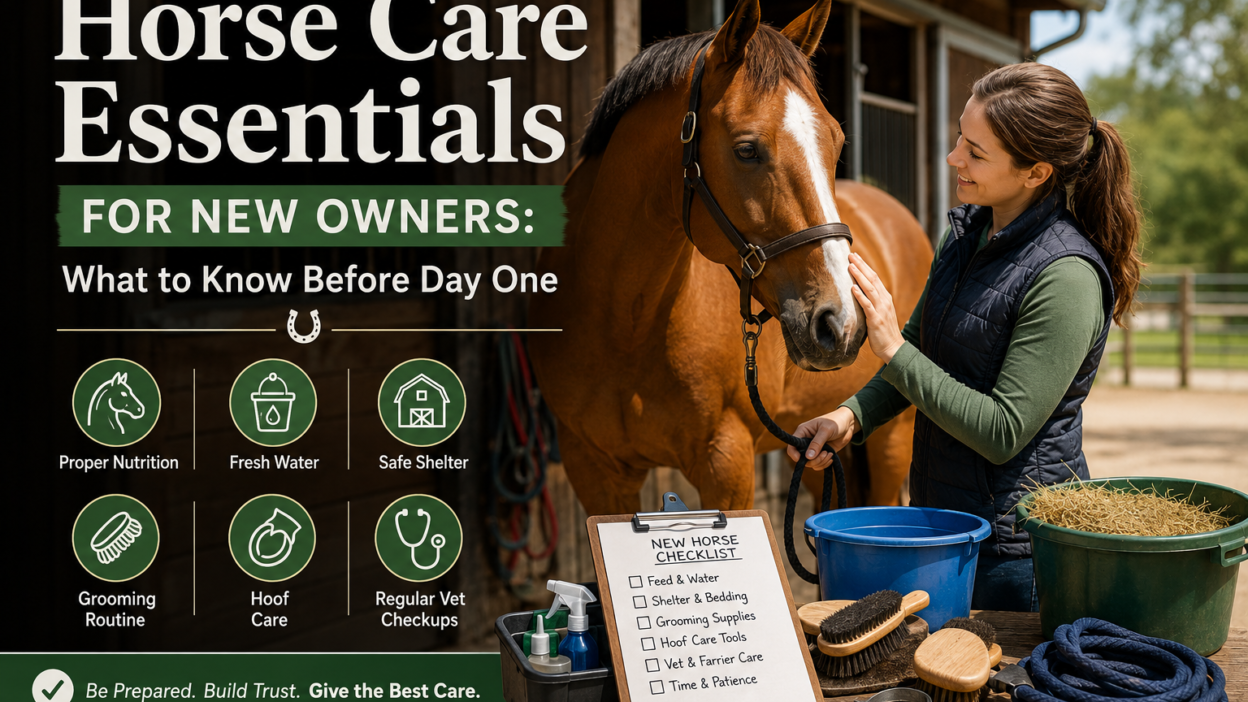
The first time you get your horse is among the most thrilling experiences for anyone who is a lover of animals however, it also has a degree of responsibility that can be a shock to new owners after the initial excitement is over. Understanding the fundamentals of caring for horses for new owners prior to the first day is upon us will make all the difference not only for your health of your horse but also for your confidence as an owner. Horses are huge, sensitive animals that have specific health, nutritional and behavioral needs that are distinct from other animals. Getting the basics at the beginning sets the stage for a stable and trusting relationship that will last for many long time to follow. This guide outlines the essential information a horse owner new to the sport must be aware of, from food routines to long-term management of health to help you make the right decisions about your horse’s care instead of the hazard of.
Understanding What Horse Ownership Actually Involves
Before you begin to look into specific care procedures it is helpful to comprehend the complete extent of what owning horses requires on a regular and long-term basis. Horses aren’t low-maintenance creatures that can be left in peace for prolonged durations. They require a daily feed and exercise, as well as regular turnsout, regular health checks, and continuous care for their surroundings. Contrary to cats and dogs who can easily adapt to living in a home or have sometimes horses require the space, routine and a consistent level of care. This generally requires significant access to their property or a boarding facility at an exclusive facility.
Many new owners overlook the commitment to time and can last anywhere between one and several hours per day, dependent on whether the horse is in a stall or is kept in pasture or is boarded in the full-service facility. Beyond the basic needs of daily life horse owners also have to make a serious financial commitment to cover food, vet care as well as farrier visits. There are also the unexpected expenses for medical care that could occur even with the most meticulous care routine. Knowing the full picture in advance lets new owners establish realistic expectations, rather than becoming overwhelmed when the reality of daily obligations takes over.
Setting Up the Right Living Environment
One of the most crucial requirements for horse care for new owners is to create an appropriate and safe living space prior to the time that the horse arrives. Horses require adequate shelter regardless of whether it’s a barn stall that is properly constructed or a run-in shed within the pasture or a combination of both based on the climate of your property and configuration. Shelters should guard against wind, extreme weather and direct sunlight yet allow adequate ventilation to prevent respiratory problems that may develop in spaces that are not well ventilated.
Fences require particular attention as horses are big strong animals that are that can test or damage fencing that isn’t strong enough, and can result in serious injuries should fencing fail unexpectedly. Solid fences made of wood, well-maintained wire fencing that has visible rails or horse fencing that is specifically designed to reduce the risk of injury are all viable alternatives, but barbed wire should be removed completely because of the severe danger of injury to horses that become trapped in it. It is also crucial to consider the space available for pasture as horses greatly benefit from regular exercise and turnout both for their physical health and mental well-being, which makes an insufficient or cramped turnout space the most common cause of health and behavioral problems later on.
Nutrition and Feeding Fundamentals Every New Owner Needs to Know
Nutritional health is one of the most crucial requirements for horse owners to understand early on because food mistakes could result in serious health problems that range from digestive issues to more serious conditions such as laminitis or colic. Horses are grazing by nature, which means their digestive systems work best when they have access to forage all day instead of frequent, large meals. Access to pasture or hay that is of high quality is the primary ingredient in any horse’s diet. It’s usually being supplemented with grains or targeted feed according to the horse’s work load, age, and health requirements.
The timing of feeding is crucial because abrupt changes in the horse’s diet, be it in the type of feed, the quantity, or timing could cause digestive issues quickly. Owners who are new to the horse should introduce diet changes slowly over a period of time or weeks instead of switching food types suddenly, giving the digestive system of the horse period of time for adjustment. Clean, safe water access every day is vital, considering that horses drink anywhere between five and 10 Gallons of water per day, according to their size, level of activity and weather conditions, which makes consistent availability of water an essential part of their daily routine.
A consultation with an experienced equine nutritionist or veterinarian to develop a suitable nutrition plan for your horse eliminates a lot of the uncertainty that new owners frequently have to deal with, especially since the nutritional requirements of horses vary dependent on factors such as age and breed, work load as well as any medical conditions.
Building a Relationship With a Veterinarian and Farrier
Establishing relationships with a qualified professional at the beginning of your horse’s ownership journey is as one of the most crucial aspects of caring for your horse for those who are just beginning their journey, since these relationships are the foundation of your horse’s health care. A vet who is familiar with horses will conduct a thorough first exam shortly after the horse’s arrival, setting up an initial health record as well as identifying any current issues that require urgent attention. Regular veterinary visits after the initial visit usually includes periodic or semi-annual checks as well as vaccinations, dental treatments and management of parasites through tests for feces as well as appropriate deworming procedures.
The care of the farrier requires equally careful focus, since hoof care directly impacts the horse’s health, comfort and general mobility. The majority of horses require a visit to the farrier every 6-8 weeks, whether to trim or for shoeing, based on the horse’s specific hoof growth rate as well as specific requirements. In the event of a missed or delayed appointment, it could result in hoof issues that can affect a horse’s gait and could lead to more serious issues with lameness in the future if not addressed. The new owners must research and establish professional connections prior to their horse’s arrival, as often as possible, instead of having to search for help from a professional when the issue is already in progress.
Comparing Common Horse Care Approaches for New Owners
Different care arrangements work best for different conditions, and understanding the differences between them can help new owners to choose a method that best fits their particular situation time, schedule, and degree.
| Care Approach | Best For | Time Commitment | Cost Level |
|---|---|---|---|
| Full Board at a Facility | New owners who do not have previous experience or property | Low to moderate | A higher monthly cost |
| Partial Board | Owners who want more direct involvement | Moderate | Moderate |
| Self-Care on Own Property | Proficient owners with sufficient facilities | High | Costs lower monthly, but greater initial investment |
| Co-Op or Shared Care Arrangement | Owners who want community support | Moderate | Variable, usually cost sharing |
Daily Grooming and Health Monitoring Habits
Regular grooming can do more than just keep the appearance of a horse and attractive, which makes it one of the most neglected important aspects of horse care for new owners to consider right from the beginning. Regular grooming sessions enable owners to check their horse’s coat, skin and legs for indications of swelling, injury or skin issues that may not be noticed until they get more grave. This practice also assists in spreading natural oils throughout the coat, eliminate the dirt and other debris that can cause skin irritation and builds the trust and bond between owner and horse through constant gentle and gentle handling.
Beyond grooming, new owners need to adopt a daily routine of health checks, examining for normal drinking and eating behaviour and a consistent output of manure as well as alertness and general manner of conduct. Horses are prey animals in nature. This means that they frequently cover up illness or pain in order to protect themselves and this makes slight shifts in behaviour or routines crucial to be aware of early. Recognizing the horse’s resting breathing rate, heart rate and temperature is a great baseline that makes it easier to determine if something is not quite right and requires vet attention.
Understanding Basic Horse Behavior and Body Language
The new owners greatly benefit from gaining an understanding of the basics of the behavior of horses and body language as a misreading of the signals of a horse can result in safety issues or stress that is unnecessary for both handler and horse. Horses communicate a lot via posture, ear position and subtle movements and recognizing the signs of calm, alertness tension, or discomfort allows owners to respond to different situations in a way that is more appropriate than reacting solely based on assumptions.
Building trust with a brand new horse takes time and perseverance especially in the case of horses that have come from a different home or circumstances that have affected its behavior in certain ways. Being present with your horse, engaging in gentle interactions such as grooming or hand-grazing, usually helps to create an authentic bond than rushing too fast into activities like riding or training prior to the foundational trust having been established. The new owners who work with a knowledgeable trainer especially in the initial weeks of owning, usually appreciate this advice in understanding their particular horse’s characteristics and establishing their own horsemanship skills in a safe manner.
Essential Supplies Every New Horse Owner Needs
Being properly prepared before your horse’s arrival will prevent unnecessary anxiety and panic when the routines of daily care begin. A simple checklist of equipment can help new owners feel confident and not be caught off-guard by a lack of preparation.
- High-quality grooming kit that includes hoof pick, brushes along with mane as well as tail grooming tools
- Correctly equipped lead rope and halter to handle the everyday demands
- A basic first-aid kit is equipped with wound care items, suitable for minor injuries that occur between veterinarian visits
Beyond this, the additional requirements for equipment will be contingent on how you intend to ride, the kind that you choose to pursue and the climate you live in and housing arrangement It is advisable to speak with a knowledgeable trainer or horseperson regarding the specific equipment that your circumstance might require.
Budgeting Realistically for Horse Ownership
Financial planning is among the most practical aspects of horse care for new owners, but it often is neglected in the excitement of the first time bringing home a horse. Beyond the initial cost of purchase or adoption the ongoing costs include food and property maintenance, as well as board vet care visit to the farrier, as well as equipment. All of which can result in a substantial annual financial commitment. Unexpected medical emergencies in the veterinary field are among the more difficult aspects of owning a horse to plan for, as even horses that are generally healthy can be struck by sudden injuries or illness which require urgent, often costly medical attention.
A financial cushion designed specifically designed for unexpected vet needs as well as exploring options for insurance for horses can help new owners avoid being in a predicament where costs could delay the need for medical attention. Be realistic about the cost of ongoing expenses prior to making the decision to purchase a horse helps both the owner of the horse and the horse better than identifying financial burdens just after the horse has become to be part of a family.
Common Mistakes New Horse Owners Should Avoid
Many of the mistakes that are repeated be a problem for new owners of horses in particular and are often the result of lack of experience rather than of care or effort. Overfeeding, especially with grains or concentrated feeds is among the most frequently encountered issues. Sometimes, it is driven by a good intention to keep horses content or happy without knowing the risks to digestion that come by excessive feed. In addition uncoordinated techniques for handling or training which are usually the result of working with multiple individuals who utilize slightly different methods may cause confusion for horses and hinder the trust-building process dramatically.
Refusing to attend to veterinary or farrier visits due to financial concerns or merely underestimating the severity of certain issues often causes more significant, and frequently more costly, issues later on. Owners who are committed to regular, proactive routines right from the start instead of waiting until the issue becomes apparent usually experience a smoother transition into ownership of their horse and can build a stronger base of trust and wellbeing with their horse.
Bringing It All Together
Learning the essentials of horse care for new owners requires patience, time and a desire to continue learning as horses are a complex animal with needs that go far beyond basic shelter and food. From creating a safe living space and a proper nutrition program to developing relationships with a reliable farrier and veterinarian, every aspect of care is crucial to the health of the horse over time and strengthens the relationship between the horse and its owner. Owners who begin their journey with a realistic outlook regular routines throughout the day, and the willingness to seek out guidance from seasoned professionals are set for a positive, sustainable experience, rather than being overwhelmed by the steep learning curve. The responsibility of owning a horse is a great one and requires a lot of commitmentNew to horse ownership? Learn the essential care basics: feeding, shelter, vet care, farrier visits, and budgeting, before bringing your horse home.
Frequently Asked Questions
How long does daily care for your horse actually take? Daily care typically takes anywhere from one to a few hours, depending on whether your horse is boarded completely or partially boarded. It can also be kept on your property. This includes grooming, food, turnout and general health checks.
Which is the top crucial aspect a new horse owner needs to begin to learn? Understanding proper nutrition and routines for feeding can be among the most crucial lessons in the beginning as mistakes in feeding could lead to serious digestive issues if introduced too soon or handled improperly.
What is the frequency an animal require the farrier? Most horses require frequent visits to the farrier every six to eight weeks to trim or shoeing. However, this may vary depending on the horse’s hoof growth rate as well as specific requirements.
Should you board a horse, or keep the property on your own in the case of an owner new to the area? Boarding at a full-service facility usually makes sense for those who have not had an extensive experience in horse care or an adequate property setup as it gives access to expert support and established infrastructure.
Which are the most significant costs that horse owners ought to plan to cover? Beyond the initial purchase price, ongoing costs include food and board, maintenance of the property, regular veterinarian and farrier treatment as well as a cushion of financial protection in case of unexpected medical emergencies, each of which needs to be anticipated realistically prior to taking a horse home.