
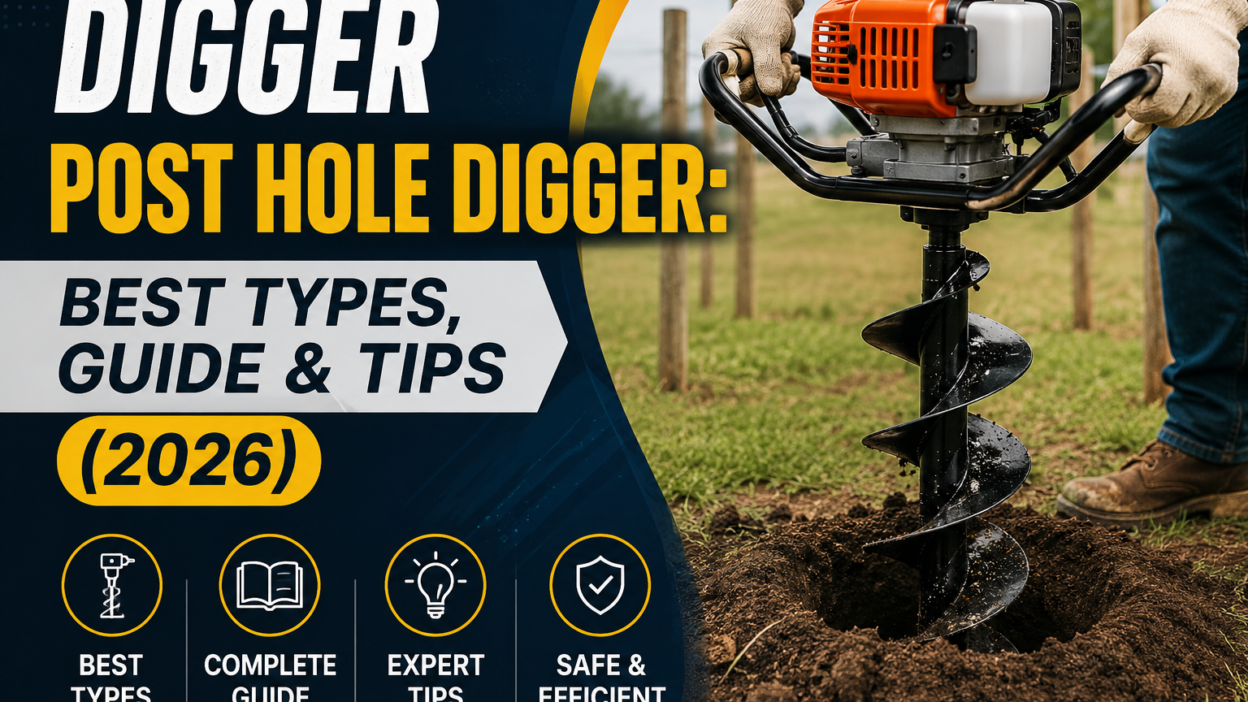
If you’ve ever attempted to lower an unsupported fence post with only a shovel, you know why a digger post hole digger is a must in every homeowner’s toolbox. Digging manually is slow and exhausting, and does not always produce the neat, narrow hole that is needed for a sturdy fence post. A high-quality post hole digger can change all that. If you’re installing the fence and setting the posts for your mailbox, planting trees or constructing an outdoor deck The right tool for digging can transform a long weekend task into a fun afternoon task. In this article we’ll walk you through the essential information you must know about selecting the right, using, and maintaining the use of a post hole digger and the main features of manual and powered models, so that you can choose the best one for the needs of your project.
What Is a Post Hole Digger and Why It Matters
Post hole digers are an specialized hand-held or power tool that is designed to make narrow deep holes in the soil, which is typically used to set footings for decks, fence posts mailbox poles, small trees. As opposed to a traditional shovel that is designed to scoop loose soil and soil, a post hole digger has been designed to efficiently cut through the earth that has been compacted and keep the hole’s diameter snug. This is since a hole that is too large wastes concrete, which weakens the post’s stability and can take longer to backfill.
The most common design people imagine would be the clamshell, or “scissor” style digger, consisting of two curving blades connected at the pivot point by long handles. You can plunge the blades into the ground, then spread the handles in order to hold the soil and then you lift it up. Repeat this motion several dozen times until you have a hole that is ready to be an erecting. It may sound easy and it’s but the physical physics of leverage that are built into the design of a digger can make an enormous difference in the amount of work each scoop will require.
Types of Post Hole Diggers You Should Know About
Every digging job doesn’t call for the same tools Understanding the most important types will save you cash and time.
Manual Clamshell Diggers
This is the standard low-cost option that people imagine when they hear the post-hole digger. There are two blades for digging joined to a hinge and the user moves with them separately and in tandem to remove soil from the holes. Manual clamshell diggers are affordable they require no fuel nor batteries, and can be used in medium to hard soil. Their biggest drawbacks are in clay-heavy, rocky or soil that is flooded with roots, where the work required can be quite intense.
Auger-Style Post Hole Diggers
An auger digger is a drill-like, spiral blade that turns into soil when your turn. Manual augers are manually operated with a powered version attached to an engine powered by gas or electric motor. Augers are adept at making perfectly smooth, even holes, and tend to be more efficient in loamy or sandy soil. However, they may struggle when they encounter massive rocks or clay, as the spiral may be blocked rather than cutting through.
Gas-Powered and Electric Post Hole Diggers
If you’re planning to tackle a lengthy fence with many posts, using a gasoline-powered or electric-powered digger is usually worthwhile to invest in. These machines usually have an auger bit that is driven by motors, and they typically are available in two-person or one-person models. Two-person models give you more control and stability when on hard ground as well as being less heavy and are easier to maneuver within tight spaces. powered diggers drastically cut down on time for labor, but have an upfront price as well as maintenance requirements, and the physical demands of directing a spinning auger.
Tractor or Skid-Steer Mounted Diggers
For commercial or large-scale agricultural fence projects post-hole digger attachment that is attached to a tractor’s power-take-off (PTO) or an a skid-steer loader is your most efficient option. They can make many holes in less than the time that a hand-tool could take, and they are able to handle hard or compacted soil much superior to manual options. The price is a compromise between the requirement of having or renting suitable heavy equipment.
Digger Post Hole Digger Comparison Table
To help you decide for you, we’ve put together a side-by review of how the most popular varieties compare with respect to the most important factors.
| Type | Best For | Average Cost | Effort Level | Soil Compatibility |
|---|---|---|---|---|
| Manual Clamshell | Small jobs occasionally used | Low ($20-$50) | High | Soft to medium-hard soil |
| Manual Auger | Sandy, loose soil projects | Moderate to low ($30-$80) | Moderate | Sandy, loamy soil |
| Gas-Powered Auger | Multiple holes Fence lines, multiple holes | Low to moderate ($300-$900) | Low to moderate | Most soil types |
| Electric Auger | Medium to light residential use | Moderate ($150-$400) | Low | Medium to soft soil |
| Tractor/Skid-Steer Attachment | Commercial or large-scale projects | High ($500-$2,500+) | Very low | All kinds of soils including the rocky |
How to Choose the Right Post Hole Digger for Your Project
Selecting the best digger hole digger is a matter of three major factors: the number of holes you have for digging, kind of soil you’re working with, as well as your budget and physical capability. If you just need to install three or two posts for the post of a mailbox or small garden trellis using a manual clamshell digger will work extremely well and cost nearly nothing. If you’re planning to build an entire privacy fence in your backyard that has twenty or more posts, a powered auger can help you save your back and weekend.
The soil type is of particular importance as it’s the aspect that most people overlook. The clay-rich soil is rock-hard after it has become dry. Using a manual digger can transform an easy task into a long-lasting affair. In such situations, soften the soil first by irrigation of the dig sites a day ahead or purchase an auger powered by gas that has enough power to cut through the dense soil. A sandy soil, on contrary, is usually best suited for either a clamshell digger or digging bar, which is paired with an auger, as augers may jam or break when they hit the buried stones.
Your physical condition is crucial as well. Digging holes for posts is truly difficult work and repetitive clamshell movements can strain your shoulders and back If you’re not accustomed to manual work. If you’re concerned regarding physical strain, a single electric auger can be a suitable compromise between price and effort.
Step-by-Step Guide to Digging a Post Hole Correctly
Making a clear, well size hole is more about skill than brute force and more about the technique. This is a simple process that is applicable whether employing a powered or manual digger.
Begin by marking your posts’ places with precision using strings and stakes, and make sure you double-check the spacing before digging any other thing. After your layout is verified and you are satisfied with it, take out any grass or sod by using a spade that is flat so that your digger has access to the soil right away. After that, put your clamshell digger right over the spot you have marked and then begin to work straight down, while keeping the device as straight as you can to avoid creating the possibility of a hole that is lopsided.
While digging, regularly verify the depth against the standard rule that the post hole should be between one-third and half the size of your post over the ground, with the minimum being 24 inches for the majority of fence posts for residential use in areas with no large frost lines. In colder climates, those with a substantial ground freeze require more holes, usually just below the frost line to ensure that posts don’t heave in winter. If you fall on a massive stone or an obstinacious root system, make a quick switch to digging bars or a root saw instead of pushing the digger, which could cause damage to the blades or auger’s flighting.
When you’ve reached your goal depth, you can add a few inches of gravel to the bottom of the hole to allow for drainage prior to setting the post. This little step stops water accumulation around the base of the post and is among the main causes of rot-related wood decay on fence post.
Common Mistakes People Make When Digging Post Holes
Even the most experienced DIYers face unavoidable issues working with the post hole digger. The most frequent mistakes is to dig hole that is too large this happens when the digger has not been kept in a straight line or the user does a lot of scooping in each run. A large hole will require significantly more concrete to properly fill and may make the post less sturdy as time passes. Another mistake that is often made is to underestimate soil moisture. Digging in dry compacted soil significantly increases efforts and strain on your tools, while digging right after a heavy downpour can cause the wall of the hole to collapse prior to installing the post.
People are also prone to miss the requirements for depth, particularly in areas with colder temperatures where frost heave could make shallow posts disappear from the ground after a couple of winters. In addition, a lot of first-time users don’t take into account the underground utilities lines. Before you begin digging in your home, it’s worthwhile to call your local utility locating company as striking the line that is buried with an auger powered by electricity can be hazardous and costly.
Maintaining Your Post Hole Digger for Long-Term Use
A bit of maintenance can go in a big way to prolong the lifespan of any digging device. For clamshell diggers that are manual, keep the blades in tip-top shape with the use of a metal file because dull blades need more effort to break through the dirt and roots. After every use, clean off the caked mud, and thoroughly dry the blades to stop rust from forming. apply a thin layer of oil on the pivot joint to ensure that the handles can continue to glide smoothly.
Powered augers require a little more care. Make sure the auger’s part is not bent or dull flighting following prolonged use, especially in the event that you’ve been able to hit rocks when digging. Gas-powered models should undergo regular maintenance to their fuel systems that includes fresh fuel and fresh air filters. electric models must be inspected for damage to their batteries and cords. connections checked for wear. The storage of the digging machine in an air-tight location and away and from exposure directly to humidity or rain is a good way to prevent rust and ensure that moving parts function in a safe manner for the duration of time.
Manual vs Powered Diggers: Which One Actually Saves You Time
It’s tempting to believe that an auger powered by electricity always will save time, but this is not always the case. In the case of a few holes in soil that is soft, the set-up time of an auger powered by gas, which includes fueling as well as priming and securing for a two-person team, could actually be more time-consuming than using a clamshell digger, and completing the task manually. The power tools can be seen to have a real advantages when dealing with multiple holes, challenging terrain, or strict time frame for your project. If your project meets one of those boxes, the initial investment or rental price of a digger powered by electricity typically is repaid in the form of the time saved and decreased physical strain.
Renting vs Buying a Post Hole Digger
For the majority of home owners, leasing a post hole digger for one major project makes more financial sense than purchasing one for yourself, particularly in the event that you don’t anticipate having to use it for a long time. Rental centers for home improvement typically offer gas-powered augers per day or half-day. And the cost of renting is usually less than the cost of purchase. However If you have a farmland, have fencing for livestock, or tackle landscaping projects having a mid-range powered digger is a wise long-term investment which pays dividends over a variety of seasons.
Manual clamshell diggers are, due to their price is almost always more expensive to purchase than renting, because even when used infrequently, they justify the small price tag.
Safety Tips Every User Should Follow
Before grabbing any digger for post holes, some safety tips are important to remember:
- Always wear a pair of sturdy gloves and closed-toe footwear to shield your feet and hands from sharp edges and debris that falls.
- Check the locations of underground utilities prior to digging, especially if are using an auger powered by electricity.
- Be sure to keep bystanders, particularly pets and children, at a safe distance from any equipment that is powered while it is operating.
- Pause between manual digging sessions to avoid straining muscles particularly in the lower back.
- Check your tool for any damage or loose bolts dull blades prior to every use to avoid equipment failure in the middle of a project.
Final Thoughts on Choosing the Right Digger Post Hole Digger
The best digger post hole digger is about making sure the digger is suited to the size and the soil conditions that your project will require. A manual clamshell dredger is an ideal, budget-friendly option for smaller projects and soft ground. On the other hand, auger-style diggers, whether manually operated or powered, can provide the speed and reliability needed for bigger fence lines or more challenging soil. For larger-scale projects tractor or skid-steer attachments provide unbeatable efficiency, even with a higher price and requirements for equipment. When you think about the number of holes you’ll need as well as the type of soil that you’re working with and your personal ability to handle it, you will be able to choose a digger that will make the entire process quicker more secure, safe, and less stressful. With the correct equipment and the right technique making fencing posts and planting trees is something that is manageable rather than an unwelcome job.
Frequently Asked Questions
Is there a most effective kind of digger for post holes that is suitable for the rocky soil? Manual clamshell diggers or digging bars usually outperform augers in soil that is rocky, as augers may jam or break when they come into contact with stone buried. If you have a consistent rocky soil it is recommended to pair the digging bar with a clamshell dredge to cut up and remove rocks is often the best option.
What is the depth at which a hole for a post be? Most residential fence posts require a hole that is between one-third and half the length of the post, at a minimum, 24 inches in areas that do not have substantial ground freezing. In more cold climates, holes usually require extending to below the frost line to stop posts from shifting in the winter.
Does one individual use a post hole digger powered by electricity? Yes, one-person electric and gas powered augers are available in a variety of sizes and are suitable for a majority of residential projects. Two-person models provide more control and are suggested for more robust soil or bigger diameter holes.
Do you prefer to buy or rent an auger for a hole in the ground? For a single project or for a limited usage renting a powered auger generally more affordable. If you are regularly involved in landscaping or fencing work buying a low-cost powered digger can be an investment worth it over the long term.
What can I do to keep the post hole digger from getting rusty? Rinse off dirt and water after each use, dry the blades and auger bits thoroughly and apply a light coat of oil on metal elements and pivot point. It is important to store the tool in a dry area also helps prevent the buildup of rust over time.