
Introduction
If you’ve ever heard the term asbestos it’s likely that you’re looking into asbestos tape that was found in old buildings as well as industrial equipment or heating systems. Prior to the time that modern safety standards were established asbestos tape was considered to have exceptional thermal resistance, durability and insulation capabilities. But as the field of science advanced, it became evident asbestos fibers could pose serious dangers to health when damaged.
Nowadays, knowing asbestos is crucial for contractors, homeowners as well as property buyers and facility managers working with older structures. Knowing where asbestos tape might be located, how to identify asbestos, and what is the most secure approach to deal with it will aid in avoiding unnecessary exposure while also ensuring the compliance of current laws. This guide will explain everything you must know about asbestos and its history, typical applications and methods for identifying it, the most recent alternatives, and the best methods for managing it safely.
What Is Asbestlint?
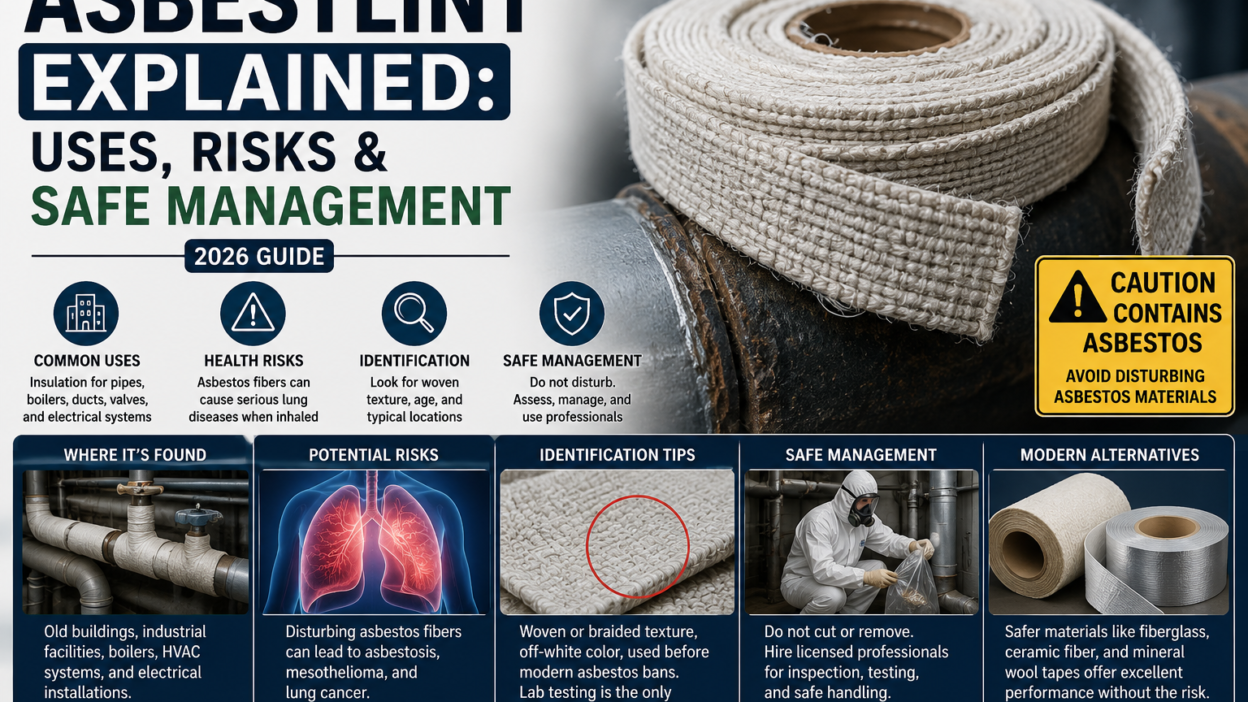
Asbestlint is the Dutch name used to describe asbestos tape that is an woven or braided material that is made of asbestos fibers. It was extensively used during the 20th century due to its incredible resistance to fire, heat chemical, electrical conductivity.
Asbestos tape is typically used to wrap around boilers, pipes and ducts, valves, electrical cables, industrial equipment and other devices to increase the insulation and protect against fire.
Although asbestos production has been largely been stopped in a number of nations, asbestos tape might remain in some buildings that were constructed or remodeled prior to when asbestos restrictions were put in place.
Why Was Asbestlint Used?
Before the advent of safer materials asbestos was regarded as the ideal industrial material.
Its popularity stemmed from a variety of advantages in performance:
- Extraordinary heat resistance
- Excellent fire protection
- High durability
- The properties of insulation are strong and durable.
- Resistance to corrosion by chemicals
As a result of these attributes asbestos tape was used in factories, homes and hospitals, schools ships, power plants.
Common Applications of Asbestlint
Asbestos tape was used for a variety of purposes in industrial and residential contexts.
Pipe Insulation
Heating pipes that carried steam or hot water were often wrapped in asbestos tape to limit the loss of heat and increase efficiency of energy.
Boilers and Furnaces
Industrial boilers usually had asbestos tape for seams and joints where temperatures could be high.
HVAC Systems
Heating and ventilation systems from the past frequently employed asbestos tape for sealing connections between ducts and provide thermal insulation.
Electrical Equipment
Since asbestos is invulnerable to electricity and heat The manufacturers have used asbestos tape for cables and electrical wiring.
Industrial Machinery
Industries often used asbestos tape to insulate valves turbines, pumps, and other high-temperature processing equipment.
Why Is Asbestlint Considered Hazardous?
The main concern with asbestos is not with the substance it self when left in a state of complete silence. The main risk is when asbestos-containing materials are damaged cut, drilled or fractured, or lose their integrity as they age.
In the event of a disturbance, tiny asbestos fibers can be airborne. They are inaccessible for the uninitiated eye but could remain suspended in air for long periods of time.
Inhaling repeatedly over time exposure can lead to serious respiratory ailments.
To this end, finding asbestos-containing material that could be used in construction or demolition is crucial.
How to Identify Possible Asbestlint
The process of identifying asbestos tape is difficult because many of the older insulation products look identical.
A variety of characteristics could indicate the presence of this condition:
| Characteristic | Description |
|---|---|
| Color | Gray, white or off-white |
| Texture | Woven, braided or cloth-like |
| Age | Habitual in constructions built prior to the current asbestos regulations |
| Typical Location | Pipes, boilers, ducts valves electrical systems |
| Condition | It may appear to be brittle, aged or wrapped in multiple layers |
A visual appearance alone does not indicate whether asbestos is present in a given material. Testing in a laboratory is usually required for a definitive identification.
Buildings Most Likely to Contain Asbestlint
Older properties deserve particular attention.
This could include:
- Residential homes built decades ago
- Apartment structures
- Schools
- Hospitals
- Industrial facilities
- Warehouses
- Factories
- Commercial buildings that are older
A lot buildings have seen modifications over the years However, the old insulation materials might remain in unused places.
What Should You Do If You Discover Asbestlint?
The presence of asbestos tape in the vicinity is not a guarantee that there is a risk immediately.
The best way to protect yourself is to stay clear of damaging the substance. Avoid cutting, sanding or scrape or remove it by yourself.
If you are planning to renovate you should have the building material thoroughly evaluated before any construction work begins.
Maintaining the material in its original condition until it is assessed is usually the most secure choice.
Modern Alternatives to Asbestlint
Modern insulation materials offer outstanding performance, without asbestos.
The most popular alternatives are fiberglass insulation tape ceramic fiber tape silica fiber products mineral wool insulation as well as high temperature synthetic tapes.
These new materials are compliant with current safety standards, while providing outstanding thermal performance for industrial and residential applications.
Safe Management and Maintenance
Constructions that contain asbestos materials need an educated and well-planned management, not panic.
Property owners must keep accurate documents of asbestos-containing materials as soon as they are identified, check them frequently to look for signs of degradation and make sure that maintenance does not disturb them.
If repairs or renovations are required making plans ahead can help reduce risk and helps ensure conformity with the applicable regulations.
Future Outlook
As older buildings undergo renovations The awareness of asbestos-containing building materials increases. Inspections for property surveys by professional inspectors and responsible management of buildings are crucial elements of secure construction methods.
The latest building material has substituted asbestos, which has allowed new construction projects to be able to provide outstanding insulation and fire resistance without the need for hazardous fibers.
Conclusion
The understanding of asbestos is vital for anyone who works with or living in old structures. While asbestos tape was appreciated for its durability insulation, heat and resistance It is now regarded as a substance that needs cautious handling due to the possibility of health risks when it’s disturbed.
Knowing where asbestos tape might be located, understanding its characteristics common to all asbestos tapes and implementing appropriate management methods can ensure the safety of both workers and occupants. When you’re purchasing an older house or planning to make renovations, or overseeing a commercial building making informed decisions is the most effective way to handle materials that might contain asbestos.
Frequently Asked Questions
1. How do I define asbestlint?
Asbestlint refers to the Dutch term used to describe asbestos tape, which is an material used as an insulation for fire and heat resistance in industrial and residential buildings.
2. Where can asbestos tape be commonly located?
It could be located around boilers, heating pipes and heaters, HVAC pipes valves, as well as older electrical wiring, in particular constructions built before asbestos regulations.
3. Can I tell if asbestos tape is mine just by simply looking at it?
No. A lot of insulation products appear similar. A visual inspection alone is not enough to determine whether asbestos is present in the material as a result of laboratory analysis, which is typically required to make an accurate determination.
4. What should I do if believe I’ve found asbestlint?
Do not disturb the material and schedule an evaluation prior to beginning any construction or demolition work.
5. Are there alternatives that are safe for asbestos tape?
Yes. Modern insulation products like fiberglass tape ceramic fiber tape silica-based insulation can provide efficient thermal protection without asbestos.