
Introduction
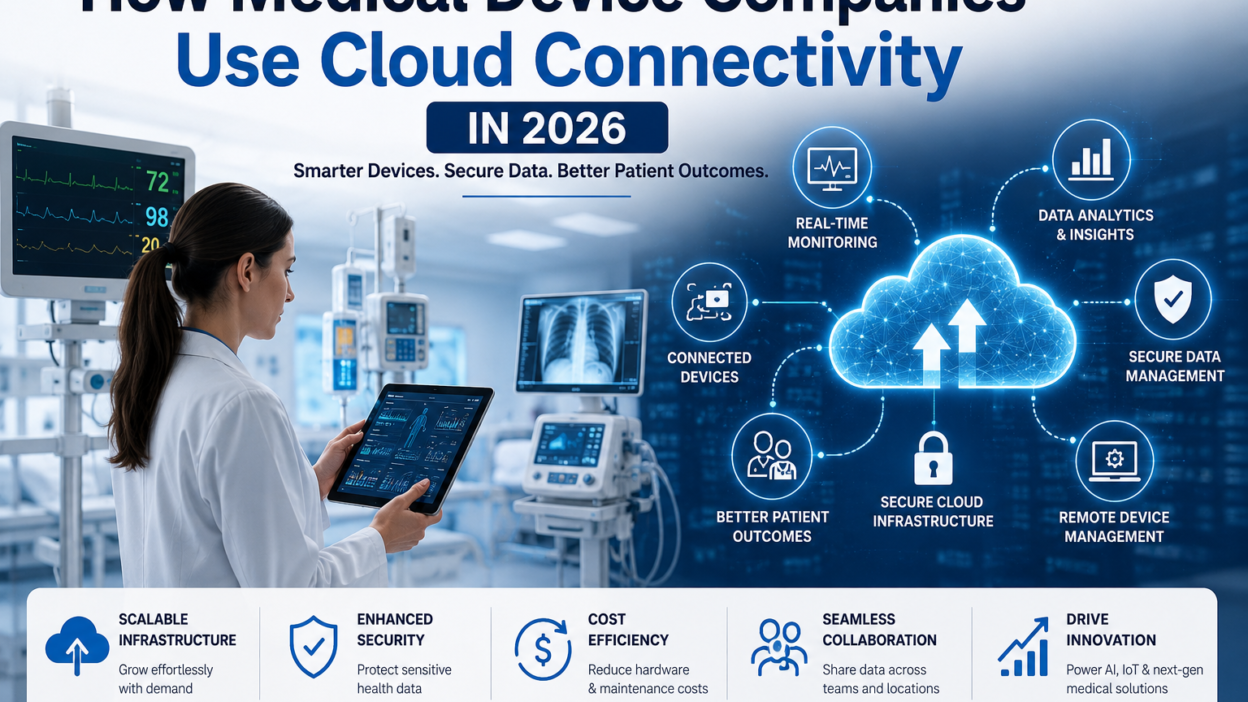
The medical industry is experiencing the digital revolution as manufacturers of medical equipment’ cloud connectivity has emerged as one of the major innovations driving the industry. From remote monitoring of patients and wearable sensors, to smart imaging equipment as well as Infusion pumps that are connected, cloud-connected medical devices are revolutionizing the way healthcare providers gather information, process, and respond to the clinical information.
The cloud’s connectivity in 2026 will not considered to be an option. It is now a vital technology that improves outcomes for patients as well as supports decision-making driven by data. It simplifies operations, and allows health professionals access crucial data from anywhere. As hospitals, clinics manufacturers, and patients more adopt connected technology and cloud infrastructure, understanding the importance of cloud-based infrastructure for medical equipment is now more crucial than ever before.
This article explains the cloud connectivity process how it works, the reasons why it’s important as well as its benefits security and privacy considerations, the issues with implementation, new trends as well as what’s in store for the cloud connectivity industry.
Understanding Medical Device Cloud Connectivity
Cloud connectivity is the capability in medical device to secure transfer, store and process data through a cloud-based remote infrastructure instead of using only local systems.
Connected devices will constantly upload health data operational metrics, operational data software diagnostics, operational metrics, and performance information to centralized platforms. Health professionals and authorized users are able to access this data through secured dashboards, mobile applications or information systems for hospitals.
For example, continuous glucose monitors and remote heart monitors digital imaging systems, ventilators wearable health trackers and diagnostic devices that are smart.
Why Cloud Connectivity Matters for Medical Device Companies
Healthcare is increasingly dependent upon precise and reliable information. Traditional devices that are standalone often have limited access to information, and required the manual process of retrieving data or storage locally.
Cloud-based solutions eliminate these barriers through facilitating seamless communication between manufacturers, healthcare professionals as well as support staff.
Technology has many important advantages.
- Access to information about patients faster
- Remote monitoring capabilities
- Updates to software automatically
- Predictive maintenance
- Better collaboration among healthcare professionals
These capabilities increase operational efficiency and provide better healthcare for patients.
Evolution of Connected Medical Devices
The initial generation of medical devices that were digital focused mostly on electronic record keeping as well as basic automated. Modern cloud-connected devices go further, using artificial intelligence as well as cybersecurity, analytics, and real-time communications.
The modern systems can spot abnormal readings, alert healthcare professionals immediately and schedule preventive maintenance and provide valuable insight from the aggregated information. This has greatly extended the use of connected health technology.
Key Benefits of Cloud Connectivity
One of the most significant advantages of medical devices that are cloud-connected is their continuous accessibility. Clinicians are able to review patient data even when they’re away from the hospital, which allows quicker intervention when needed.
Patients also gain from remote health programs that cut down on unnecessary visits to clinics while keeping an eye on chronic ailments.
Cloud infrastructure can be scaled as companies increase their fleet of devices without committing a lot of money to local servers. Automatic backups lower the chance of losing data, and central management streamlines administration across several locations.
Manufacturers gain valuable operational insight which can help in future product development and pinpoint problems with performance before they impact the patient’s health care.
Comparison of Traditional and Cloud-Connected Medical Devices
| Feature | Traditional Devices | Cloud-Connected Devices |
|---|---|---|
| Data Storage | Local only | Centralized cloud platform |
| Remote Monitoring | Limited | Access in real-time |
| Software Updates | Manual | Secure remote deployment |
| Predictive Maintenance | Minimal | Advanced Analytics and Alerts |
| Collaboration | Device-specific | Access to multiple users across different locations |
| Scalability | Restricted | Highly adaptable infrastructure that is highly scalable |
Real-World Applications
Cloud connectivity powers numerous healthcare scenarios across different specialties.
Remote monitoring of patients allows doctors to monitor glucose levels, blood pressure heart activity, blood pressure, and oxygen saturation without regular visit to the doctor’s office. Patients recovering from surgery are able to transmit health-related data at home and clinicians are alerted if levels exceed the safe limit.
Diagnostic imaging systems are increasingly using cloud-based platforms to store scanning scans and sharing them among experts. Laboratories are able to process data more efficiently and facilitate consultation across borders.
The hospitals also gain from central equipment management. Administrators can track device performance and the rate of utilization, scheduled maintenance and software versions through unidirectional dashboards.
Improving Patient Care Through Connected Technology
The main goal of cloud connectivity is to improve the outcomes of patients.
Monitoring in real-time allows for early intervention if medical conditions alter abruptly. As opposed to waiting until appointments, physicians receive instant alerts and can suggest changes immediately.
Patients in areas that are rural or not well-served have access to specialists via the telehealth system, which is that are supported with connected devices. This helps reduce travel costs while increasing accessibility to healthcare.
Additionally, cloud analytics assist to detect long-term health issues that could otherwise be overlooked.
Cybersecurity and Data Protection
Security remains among the most important factors to consider for medical devices that are connected to the cloud.
Healthcare data is extremely sensitive information, which requires multiple layers of security, such as encryption and authentication as well as network segmentation. It is also essential to have continuous monitoring and secure access control.
Modern cloud architectures incorporate solid security frameworks that are designed to limit access to unauthorised users and identify suspicious activity rapidly.
The company should also develop plans for responding to incidents and conduct periodic security assessments and train employees on the best practices in cybersecurity.
Regulatory Considerations
Companies that manufacture medical devices operate within highly-regulated environments where safety of patients and data integrity are of paramount importance.
Cloud-connected devices must be compliant with the applicable regulations for healthcare as well as privacy standards, quality standards, rules, and cybersecurity standards in the countries where they are utilized.
Manufacturers must document their software development methods, verify the system’s performance, keep audit trails, and guarantee that the system is traceable throughout its life cycle.
Compliance with regulations is not a once-in-a-lifetime task but a continuous commitment that requires constant monitoring and updates.
Challenges Facing Medical Device Companies
Despite many benefits, the implementation of cloud connectivity can be a challenge.
Older equipment might not be able to integrate seamlessly with the latest cloud platforms, which may require updates or replacement. Interoperability among devices from different manufacturers can create technical complications.
Limits on bandwidth in specific regions can impact performance, especially for applications that require a lot of data, such as medical imaging.
The organizations must manage their costs associated with the migration process, cybersecurity investments employees’ training, long-term maintenance.
In addition, maintaining trust among patients is dependent on clear communication regarding privacy safeguards and the responsible handling of data.
The Role of Edge Computing
Edge computing is a complement to cloud connections by encoding specific information close to the device prior to transmitting specific data to servers centrally.
This decreases latency, improves speed of response, and decreases the amount of bandwidth used. Critical alerts are generated instantly, while a thorough analysis takes place within the cloud.
In healthcare applications that are time-sensitive, the combination of edge processing and cloud infrastructure offers speed and the ability to scale.
Artificial Intelligence and Predictive Analytics
Connected devices produce huge amounts of data which can be used to improve the quality of healthcare.
Predictive analytics identify patterns that suggest the failure of equipment, disease progression as well as operational problems. Intelligent systems can suggest maintenance schedules and prioritize reviews of clinical care or spot subtle anomalies which require more examination.
As the analytical capabilities continue to develop cloud-based platforms are likely to play an an increasing part in assisting proactive strategies for healthcare.
Interoperability and Standards
Successful cloud ecosystems depend on interoperability–the ability of different systems and devices to exchange information consistently.
Standardized communication protocols can reduce dispersion and allow hospitals to connect the connected devices with health record systems, electronic medical records lab systems imaging platforms, and Telemedicine solutions.
Better interoperability results in improved coordination between healthcare professionals and improves the patient experience.
Future Trends in 2026 and Beyond
Many developments are expected to determine the future of cloud-based medical device connectivity.
Hybrid cloud platforms will enable businesses to achieve a balance between flexibility and security. Increased remote diagnostics are expected to lower maintenance costs and reduce downtime.
Digital twins could mimic the performance of equipment for the purpose of predictive optimization. Advanced cybersecurity technology can strengthen security against ever-changing threats.
The future of personalized medicine will increasingly depend upon connected ecosystems of data that integrate the wearable monitor, genomes medical imaging and data to aid in making individualized treatment decisions.
Best Practices for Successful Cloud Integration
Cloud-connected medical devices that are being developed by organizations must focus on their the strategic implementation, not technology by itself.
The most important priorities are:
- In the planning process, security is considered right from the beginning.
- ensuring compliance with regulations in force.
- Prioritizing interoperability as well as scalability.
- Insisting on the training of employees and in governance.
- Continuously monitoring systems to ensure security and performance.
These principles can help to maximize the long-term value of your business while reducing risk in operations.
Conclusion
The growth of the medical devices industry’s’ cloud connectivity is one of the most important developments in the field of modern healthcare technology. Secure cloud integration allows remote monitoring, increases collaboration, facilitates predictive analytics, improves outcomes for patients and speeds up the management of operations across healthcare systems.
When connected gadgets become more sophisticated by 2026, businesses that focus on cybersecurity and interoperability as well as regulatory compliance and scalable infrastructure will be better equipped to offer innovative and efficient solutions to healthcare. Cloud connectivity isn’t an enhancement in technology, but it is becoming the base to the future of smart medical treatment.
Frequently Asked Questions
1. How can cloud connectivity be used? medical devices?
Cloud connectivity enables medical devices to securely transfer, store data, and access it via cloud-based remote infrastructure providing monitoring, analytics and collaboration.
2. Why is cloud connectivity so important in healthcare?
It enhances the accessibility of data on patients, supports remote care, facilitates predictive maintenance and aids healthcare professionals make quicker, more informed choices.
3. Are cloud-connected medical devices secure?
If properly designed, using encryption, authentication, monitoring, and robust security practices, they could provide an excellent level of security for medical information.
4. Which medical devices are most commonly connected to cloud connectivity?
Some examples include glucose monitoring devices, wearable medical monitors heart monitoring systems imaging equipment, pumps for infusion, and remote devices for monitoring patients.
5. What are the most challenging issues in the implementation of connected medical devices that are cloud-based?
Organisations are often faced with integration challenges as well as cybersecurity and regulatory compliance requirements and the necessity to ensure interoperability among various healthcare systems.